
Starting a career in cybersecurity can feel exciting and a little overwhelming, especially in the USA. Many fresh graduates wonder, “What salary can I expect as a fresher?” The answer depends on several factors, including education, job role, skills, and the city where you work. In this guide, you’ll find clear explanations, real numbers, and some practical advice to help you understand the cybersecurity salary landscape in the United States.
Typical Cybersecurity Salary For Freshers
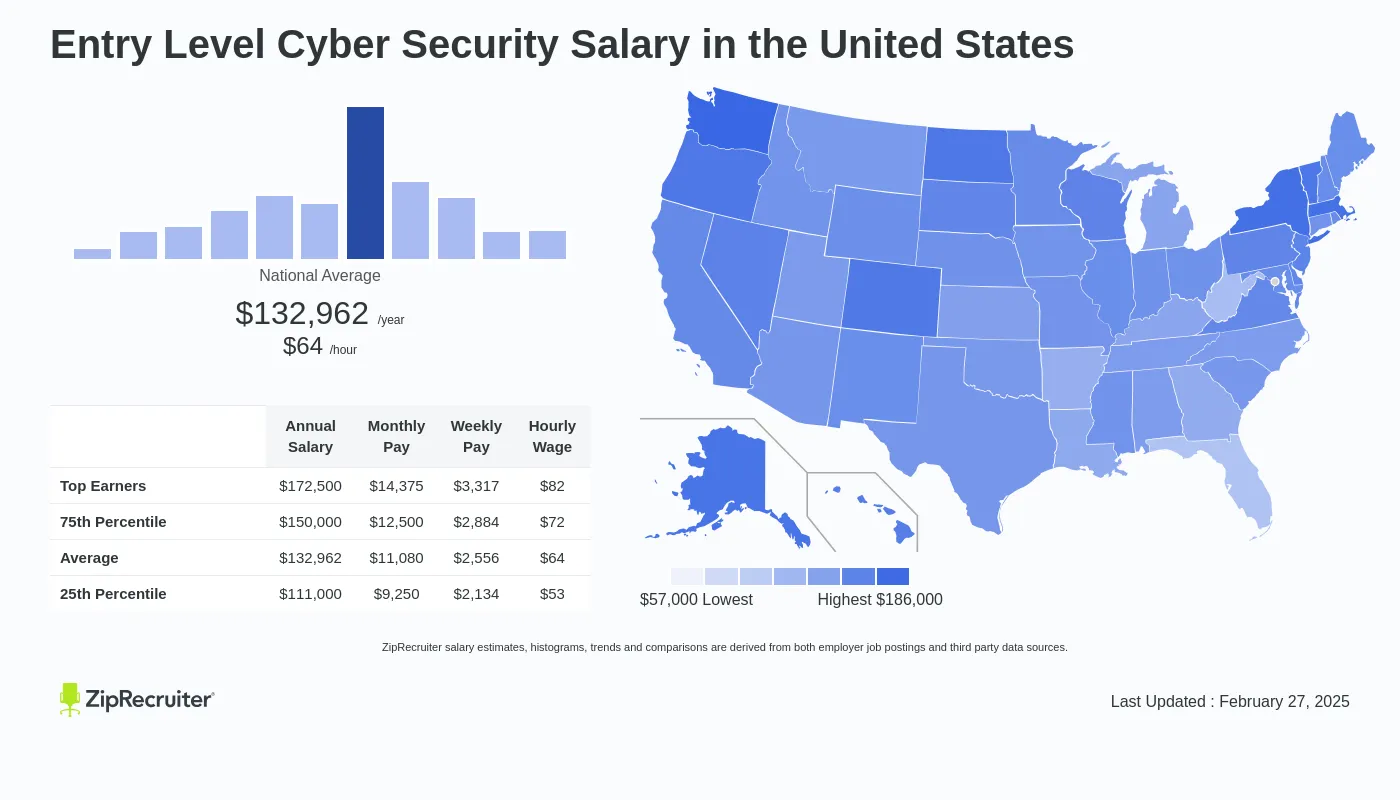
Most entry-level cybersecurity jobs in the US offer a competitive salary. According to industry data, freshers (those with less than one year of experience) usually earn between $55,000 and $75,000 per year.
Here’s a quick comparison of common entry-level roles:
| Job Title | Average Salary (USD) |
|---|---|
| Security Analyst | $62,000 |
| IT Auditor | $60,000 |
| Network Security Administrator | $65,000 |
| Incident Responder | $70,000 |
| Penetration Tester (Junior) | $75,000 |
Even the lowest starting salaries in cybersecurity are often higher than many other tech fields. This is because cybersecurity skills are in high demand.
Factors That Affect Salary
Your first cybersecurity salary is not set in stone. Several things can make your starting pay higher or lower.
Location
Where you work matters. Big cities like San Francisco, New York, or Washington D.C. usually offer higher salaries. However, the cost of living is also higher in these places.
| City | Entry-Level Salary | Cost of Living Index |
|---|---|---|
| San Francisco | $80,000 | 100 |
| Dallas | $65,000 | 75 |
| Atlanta | $60,000 | 70 |
Education And Certifications
A bachelor’s degree in computer science, information technology, or cybersecurity is often required. However, certifications like CompTIA Security+, Certified Ethical Hacker (CEH), or CISSP Associate can help you stand out and sometimes earn a higher salary.
Skills And Internships
Employers look for hands-on skills. If you have done internships or practical projects, you may be offered a better starting salary. Knowing tools like Wireshark, Metasploit, or Splunk can also give you an edge.
Credit: transfotechacademy.com
Non-obvious Insights For Freshers
- Government jobs in cybersecurity often start with lower pay than private companies, but they offer better job security and benefits.
- Many companies offer signing bonuses or help pay for further certifications if you agree to stay for a few years. Don’t forget to ask about these perks.
Common Entry-level Job Titles
Here are some roles freshers can target:
- Security Analyst: Monitors and defends networks.
- Incident Responder: Handles security breaches.
- Junior Penetration Tester: Tests for system weaknesses.
- IT Auditor: Checks compliance and policies.
- Security Administrator: Manages security tools and access.
Each has its own growth path and salary range.
Credit: transfotechacademy.com
How To Maximize Your Starting Salary
- Build a strong LinkedIn profile and network with professionals.
- Apply for internships before graduation.
- Learn real-world tools and try Capture the Flag (CTF) competitions online.
- Research average salaries on sites like Bureau of Labor Statistics before negotiating.
Frequently Asked Questions
What Degree Do I Need For An Entry-level Cybersecurity Job?
Most jobs ask for a bachelor’s degree in computer science, IT, or cybersecurity. Some positions accept an associate degree plus certifications.
Do Certifications Increase My Starting Salary?
Yes. Certifications like Security+ or CEH can boost your value and show you have real skills, leading to higher pay.
Can I Get A Cybersecurity Job Without Experience?
Some companies hire freshers if you have a degree and can show practical skills through projects, labs, or internships.
Which Us State Pays The Highest Cybersecurity Salaries?
California and New York usually offer the highest entry-level salaries, but living costs are also higher there.
Is Remote Work Common For Cybersecurity Freshers?
Remote work is growing, but most entry-level roles still expect you to be onsite for training and teamwork.
Starting your cybersecurity journey in the USA offers solid pay and many growth opportunities. Keep learning, build real skills, and remember—your first salary is just the beginning of a rewarding career.
Credit: www.ziprecruiter.com



 Posts
Posts





.jfif)
.jfif)
0 Comments